Solar Farms in Malta — Large-Scale PV Projects
While Malta's small land area makes utility-scale solar farms challenging, the country has pursued creative solutions including ground-mounted installations, floating solar, and agrivoltaics to expand its renewable energy capacity beyond rooftops.
Last updated: 22 November 2026
Current Solar Farm Projects in Malta
Malta's utility-scale solar ambitions are constrained by its tiny land area of just 316 km², yet several notable projects have demonstrated that ground-mounted PV can play a meaningful role alongside the country's dominant rooftop solar sector.
The Largest Installations
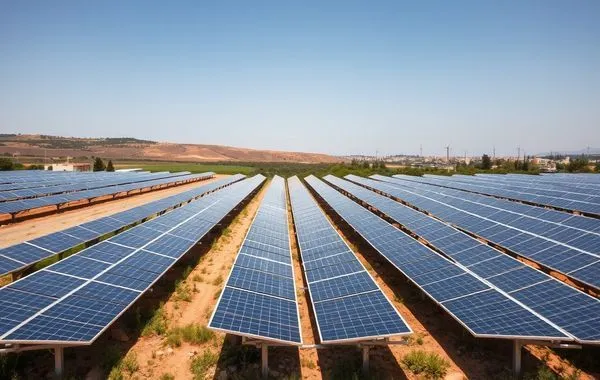
REWS reports that the largest single PV installation in Malta is 5.4 MWp, and that 97.5% of all installations are 11 kWp or smaller (REWS 2026 Monitoring Report), so ground-mounted farms remain the exception. In May 2026 telecoms company Melita brought a privately funded 3.5 MWp solar farm into operation on a former quarry at Mqabba: about 5,000 panels on roughly 24,000 m², reported as the third largest in Malta.
Sites on Public Land
Other ground-mounted PV sits on government-owned land such as disused quarries, landfill buffer zones and land next to infrastructure corridors. We could not verify a complete list or their capacities, but individually these sites are small compared with rooftop solar as a whole.
Car Park Solar Canopies
A growing trend in Malta involves the installation of solar canopy structures over car parks at commercial centres, public buildings, and transport hubs. These dual-purpose installations generate electricity while providing shaded parking — a valuable amenity in Malta's intense summer heat. Several shopping centres and the Malta International Airport have adopted this approach, combining renewable generation with practical benefits for users.

The Land Area Challenge
Malta faces a fundamental constraint that no other EU member state shares to the same degree: extreme scarcity of available land. With a population density exceeding 1,600 people per km² and virtually every hectare already allocated to housing, agriculture, industry, or heritage protection, finding space for large-scale solar farms is exceptionally difficult.
Key competing land uses that limit solar farm development include:
- Agriculture: Malta's limited agricultural land is protected under national planning policy. Converting farmland to solar installations faces strong regulatory and public resistance.
- Housing and development: Ongoing population growth and construction demand mean that developable land commands extremely high prices, making solar farms economically uncompetitive for land acquisition.
- Heritage and environmental protection: Natura 2000 sites, Areas of Ecological Importance (AEI), and scheduled archaeological zones place significant portions of open land off-limits for development.
- Military and infrastructure uses: Airport buffer zones, water catchment areas, and utility corridors consume additional land that might otherwise be considered for solar projects.
These constraints mean that Malta's solar strategy relies heavily on rooftop installations, which exploit already-built surfaces rather than consuming undeveloped land. Nevertheless, creative approaches to ground-mounted solar continue to emerge.

Floating Solar Potential
Floating photovoltaics (FPV) — solar panels mounted on pontoons or floating platforms on water bodies — represent one of the most promising pathways for expanding Malta's solar capacity without consuming scarce land. While Malta lacks large lakes, several water bodies and marine areas have been identified as potential floating solar sites. A proposed 50 MW floating plant off Delimara went to public consultation in 2024; 13 proposals were received and an expert committee is evaluating them, with no award found.
Reservoir and Water Storage Sites
Malta's water management infrastructure includes several reservoirs, water treatment facility basins, and storm-water retention ponds. Installing floating solar on these surfaces offers a dual benefit: generating clean electricity while reducing water evaporation — a significant advantage in a country that suffers from chronic water scarcity and relies heavily on energy-intensive reverse osmosis desalination.
Harbour and Port Areas
Malta's extensive harbour infrastructure, including the Grand Harbour, Marsamxett Harbour, and the Freeport at Marsaxlokk, offers sheltered marine areas where floating solar platforms could potentially be deployed. These installations would need to be carefully designed to avoid interference with shipping operations, but quieter harbour basins and disused dock areas could prove suitable.
Nearshore Marine Installations
More ambitious proposals have explored the potential for nearshore floating solar arrays in sheltered bays around Malta and Gozo. Mediterranean wave conditions are generally calmer than open-ocean environments, potentially making nearshore FPV more viable than in Atlantic-facing countries. However, challenges including salt corrosion, marine fouling, storm resilience, and visual impact remain significant.
Agrivoltaics: Combining Farming and Solar
Agrivoltaics (also called agri-PV) refers to co-locating agricultural production and solar energy on the same land. Panels are elevated 3–5 metres high with wider row spacing, allowing crops to grow beneath. Research shows certain crops — particularly leafy vegetables and herbs — benefit from partial shading in hot Mediterranean climates, reducing heat stress and water requirements.
For Malta, agrivoltaics could offer protected cultivation, water conservation through reduced evaporation, and dual income streams for farmers from both crops and electricity generation. While largely at the pilot stage in Malta, the concept aligns well with the country's need to maximise the productive use of every available square metre of land.

Community Solar Schemes
Community solar (also known as shared solar or solar gardens) allows multiple households or businesses to share the benefits of a single solar installation, even if they cannot install panels on their own property. This model is particularly relevant in Malta, where many residents live in apartments, terraced houses with limited roof access, or heritage-protected buildings.
Under a community solar scheme, a medium-scale PV installation is built at a suitable location, and participants purchase or subscribe to a share of the system's output. The electricity generated is fed into the grid, and each participant receives a credit on their electricity bill proportional to their share.
Malta's first large scheme of this kind is Pannelli bla Bejt, launched by the Water Services Corporation in April 2026, in which households without a suitable roof buy a share of panels installed on WSC sites.
The EU's Clean Energy for All Europeans package explicitly encourages energy communities and collective self-consumption, providing a legal framework that Malta is progressively adopting. Community solar could unlock significant additional PV capacity by engaging the many Maltese households that currently cannot install their own rooftop systems due to building constraints.
Solar Farms vs. Rooftop Solar in Malta
The relative merits of utility-scale solar farms versus distributed rooftop installations are debated in energy policy circles worldwide, but in Malta the calculus is heavily weighted toward rooftop solar due to land constraints.
| Factor | Solar Farms | Rooftop Solar |
|---|---|---|
| Land requirement | Significant — problematic in Malta | Uses existing building surfaces |
| Cost per watt | Lower (economies of scale) | Higher per unit, but no land cost |
| Grid connection | Requires dedicated infrastructure | Uses existing building connections |
| Maintenance | Centralised, efficient | Distributed, harder to manage |
| Community impact | Can face local opposition | Generally well accepted |
| Scalability in Malta | Very limited by land | Large untapped rooftop potential |
In practice, Malta's solar strategy must pursue both approaches: maximising rooftop uptake through incentives and regulation while opportunistically developing ground-mounted and floating solar installations wherever suitable sites can be identified.

Malta's National Energy and Climate Plan Targets
Malta's National Energy and Climate Plan (NECP), submitted to the European Commission in accordance with the EU's Governance Regulation, sets out the country's energy and climate targets through 2030. Solar energy plays a central role in achieving these objectives.
Key NECP Solar Targets
Malta's National Energy and Climate Plan sets a renewable energy contribution of no less than 25% by 2030, up from 17.2% in 2024 (provisional 2025: 18.8%). Solar PV is expected to contribute the majority of this target, with planned capacity growth requiring both accelerated rooftop deployment and the development of new utility-scale projects including floating solar and agrivoltaic installations.
The NECP identifies several strategic priorities for solar farm development:
- Brownfield site conversion: Prioritising disused industrial land, quarries, and landfill sites for ground-mounted PV installations.
- Public building mandates: Requiring new public buildings and major renovations to incorporate solar generation capacity.
- Floating solar pilots: Supporting research and pilot projects for floating PV on reservoirs and in sheltered marine areas.
- Storage integration: Coupling new solar farm projects with battery storage systems to improve grid stability and maximise the value of generated electricity.
Achieving these targets will require sustained investment, supportive planning policy, and continued innovation in how Malta deploys solar technology within its unique geographic constraints.