Malta-Sicily Interconnector — Submarine Power Cable
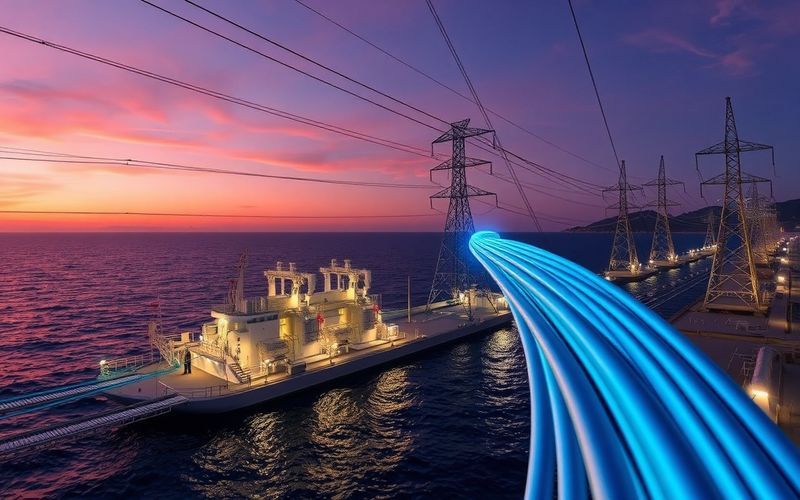
The electrical interconnector between Malta and Sicily is the single most important piece of energy infrastructure in Malta's history. This submarine cable connects the Maltese islands to the vast European Continental Grid, transforming energy security and enabling renewable integration.
Last updated: 22 November 2026
Interconnector Key Specifications
Route: Malta (Maghtab) to Sicily (Marina di Ragusa) • Length: ~120 km submarine cable • Capacity: 200 MW • Voltage: 220 kV AC • Commissioned: April 2015 • Cost: Approximately €200 million • Operator: Enemalta (Malta) / Terna (Italy)
History and Background
For most of its modern history, Malta operated as an isolated electrical island. The country's entire electricity supply was generated domestically at oil-fired power stations, primarily at the Marsa Power Station (operational from 1953) and later the Delimara Power Station (commissioned in 1992). This total reliance on imported petroleum products for electricity generation left Malta acutely vulnerable to global oil price volatility and supply disruptions.
The concept of an electrical link to Sicily dates back to the 1990s, but it was Malta's accession to the European Union in 2004 that provided both the political impetus and financial support to make the project viable. The EU's Trans-European Networks for Energy (TEN-E) programme identified the Malta-Sicily interconnector as a Project of Common Interest (PCI), recognising that connecting Malta to the European grid was essential for the country's energy security and market integration.
Construction began in 2013, with Italian transmission system operator Terna leading the submarine cable installation. The interconnector was energised and became fully operational in April 2015, marking the end of Malta's status as an energy island and the beginning of a new era in the country's electricity supply.
Technical Specifications
The Malta-Sicily interconnector is an engineering achievement that crosses one of the Mediterranean's most challenging submarine corridors.
| Cable Type | Three-core XLPE (cross-linked polyethylene) submarine AC cable |
| Voltage | 220 kV alternating current (AC) |
| Transmission Capacity | 200 MW |
| Submarine Length | Approximately 120 km |
| Maximum Depth | ~160 m below sea level |
| Malta Landing Point | Maghtab substation (northern Malta) |
| Sicily Landing Point | Marina di Ragusa (southeastern Sicily) |
| Cable Manufacturer | Prysmian Group |
| Project Cost | ~€200 million |
| EU Co-funding | Approximately €110 million (TEN-E programme) |
| Operational Since | April 2015 |
The cable route crosses the Sicily Channel, navigating a seabed terrain that includes rocky outcrops, sand-covered areas, and moderate depths. The cable was buried in the seabed where conditions allowed and protected by rock placement or concrete mattresses in areas where burial was not feasible, providing protection against anchoring and fishing trawl damage.
How the Interconnector Works
The Malta-Sicily interconnector operates as a 220 kV AC submarine transmission link that enables bidirectional electricity flow between Malta's national grid and Italy's transmission network (operated by Terna). In practice, the vast majority of electricity flow has been from Sicily to Malta, as Malta imports power to supplement domestic generation.
Power Flow and Operations
On the Maltese side, the cable terminates at the Maghtab substation in northern Malta, where it connects to Enemalta's 132 kV distribution network via step-down transformers. On the Italian side, the cable connects to Terna's high-voltage transmission grid at Marina di Ragusa, providing access to Italy's diverse generation mix including natural gas, wind, solar, and hydroelectric power.
The interconnector's 200 MW capacity is sufficient to supply approximately 30–40% of Malta's peak electricity demand. This allows Malta to operate a more flexible and efficient generation system, importing electricity during periods when it is cheaper or cleaner on the Italian market, and reducing reliance on domestic generation when conditions favour imports.
Market Coupling
The interconnector enables Malta's participation in the European electricity market through implicit market coupling. Electricity prices on the interconnector are determined by the price differential between the Maltese and Italian/European markets, with power flowing from the lower-price zone to the higher-price zone. This mechanism promotes efficient use of generation resources across borders and tends to reduce electricity costs for Maltese consumers compared to the pre-interconnector era of sole reliance on domestic oil-fired generation.

Impact on Electricity Prices
The interconnector has had a significant impact on Malta's electricity cost structure. Before the cable's commissioning, Malta's electricity was generated almost entirely from imported heavy fuel oil and diesel, making the country's generation costs among the highest in Europe and extremely sensitive to global oil price fluctuations.
With the interconnector, Malta gained access to electricity generated from Italy's diverse and increasingly renewable energy mix, typically at lower marginal costs than domestic oil-fired generation. Key impacts include:
- Reduced generation costs: Imported electricity from Italy's grid (heavily supplied by natural gas and renewables) is generally cheaper to produce than electricity from Malta's oil-fired plants.
- Price stability: Connection to the large European market provides a buffer against the extreme price volatility associated with oil-dependent generation.
- Competitive pressure: The availability of imported power creates competitive pressure on domestic generators to improve efficiency and reduce costs.
- Environmental benefits: Importing electricity generated from Italy's lower-carbon mix reduces Malta's per-kWh carbon intensity compared to domestic oil-fired generation.
While Malta's regulated retail electricity tariffs have not always reflected these wholesale cost reductions directly (due to government pricing policy), the interconnector has undeniably improved the underlying economics of Malta's electricity supply.
Role in Energy Security
The interconnector transformed Malta's energy security posture fundamentally. As an isolated island system, Malta had no backup if a major generating unit failed — a scenario that caused several significant blackouts in the pre-interconnector era. With the cable operational, Malta benefits from:
- Backup generation capacity: If a domestic power plant trips or goes offline for maintenance, the interconnector can immediately import replacement power from Italy, preventing blackouts.
- System redundancy: Malta's grid now has two independent sources of supply — domestic generation and imports — significantly improving overall system reliability.
- Emergency support: In crisis scenarios (extreme heat waves, equipment failures, fuel supply disruptions), the interconnector provides a critical lifeline to the European grid's vast reserve capacity.
- Reduced strategic fuel reserves: With interconnector backup available, Malta can potentially maintain lower strategic fuel reserves, reducing storage costs and environmental risks.
The interconnector effectively ended Malta's energy isolation and integrated the country into Europe's interconnected grid, which collectively has far greater resilience and resource diversity than any single island system could achieve alone.

Enabling Renewable Energy Integration
The interconnector plays a crucial role in enabling Malta to increase its solar and renewable energy capacity — a function that becomes more important as PV penetration grows.
Managing Solar Variability
Solar energy is inherently variable: output fluctuates with cloud cover and drops to zero at night. On a small island grid like Malta's, high levels of solar penetration can create significant challenges for grid stability. The interconnector acts as a giant buffer, allowing Malta to:
- Export surplus solar: On sunny days when domestic solar generation exceeds demand, surplus electricity can potentially be exported to Italy rather than curtailed.
- Import during shortfalls: When solar output drops (cloudy weather, nighttime), the interconnector can ramp up imports to fill the gap, maintaining stable supply without keeping expensive domestic thermal plants on standby.
- Reduce need for local balancing: Without the interconnector, Malta would need more domestic battery storage and flexible generation to manage solar variability. The cable reduces (though does not eliminate) this requirement.
Supporting Higher Solar Penetration
As Malta increases its installed solar capacity toward its 2030 targets, the interconnector becomes increasingly important. Higher solar penetration means greater variability in net demand (demand minus solar generation), and the interconnector's ability to absorb exports and supply imports flexibly is essential for grid stability at higher renewable fractions.
Second Interconnector
Given the strategic importance of the existing Malta-Sicily cable, a second interconnector is now being developed to improve Malta's energy security and make room for more renewable generation. The first cable was restored to full operation on 10 April 2026 after planned works.
Why a Second Cable?
Relying on a single submarine cable presents risks. If damaged by anchoring, earthquakes, or equipment failure, Malta would rely entirely on domestic generation until repairs were completed — a process that could take weeks or months. A second interconnector would provide N-1 security, increased capacity, and route diversity.
The planned link is a 225 MW, 220 kV AC cable of about 122 km between Maghtab and Ragusa in Sicily, with a project cost of about €297 million. The European Investment Bank signed a €100 million loan for it on 23 April 2026. The EIB project page gives no completion date and some press reports point to the end of 2027, so we cannot confirm when it will operate. Budget 2027 summaries also mention technical studies for a third interconnector and a 132 kV Malta-Gozo link, with no tender or date yet.
Relationship with Italy's Grid (Terna)
Terna S.p.A. is Italy's transmission system operator (TSO), responsible for operating the Italian high-voltage electricity grid and managing its interconnections with neighbouring countries. Terna was the primary contractor for the construction of the Malta-Sicily interconnector and continues to operate the Italian end of the cable.
The relationship between Enemalta (Malta's utility) and Terna is governed by interconnection agreements that cover:
- Capacity allocation: How the 200 MW of transfer capacity is allocated between scheduled commercial flows and reserve capacity for emergency use.
- Maintenance coordination: Scheduling of cable maintenance outages to minimise impact on Malta's supply security, ideally during low-demand periods.
- Fault response: Protocols for rapid response to cable faults, including emergency repair procedures and interim supply arrangements.
- Market coupling: Integration of the Malta-Italy interconnector into the European electricity market's day-ahead and intraday trading mechanisms.
Terna's broader Italian grid connects Malta indirectly to the entire European Continental Synchronous Area — the world's largest interconnected electrical grid, spanning from Portugal to Turkey and from Scandinavia to North Africa. This connection gives Malta access to the diverse generation resources and balancing capabilities of a system serving over 400 million people.
