Shipping & Customs
Malta is an island, so freight always routes via Italy. Here is how shipping, Incoterms, customs clearance and lithium-battery rules work when you bring your own solar equipment in.
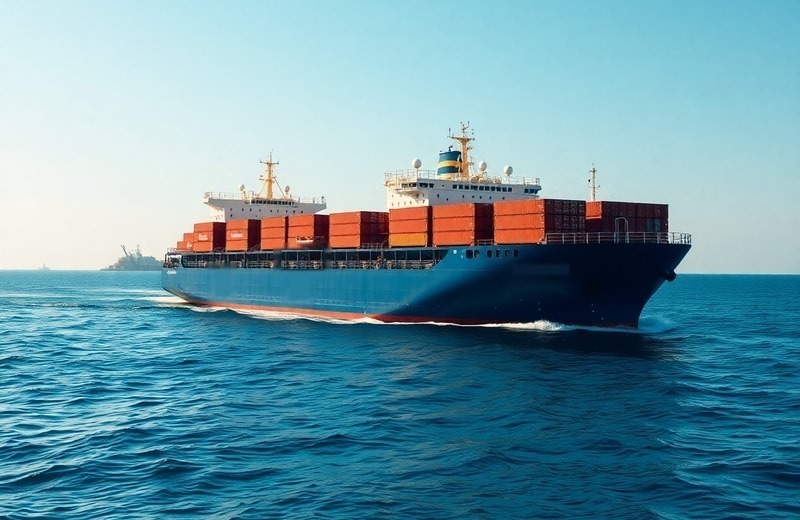
Malta has no land border, so getting solar equipment to your door is a logistics exercise before it is a shopping one. Every pallet, crate and container arrives the same way — down through Italy and across the water — and how much paperwork it triggers depends entirely on whether it started inside the EU or outside it. This page covers the practical mechanics: the routes, the Incoterms, customs clearance, and the special headache of shipping lithium batteries.
The island factor: everything routes via Italy
Because the islands sit off the southern tip of Sicily, freight for Malta is trucked down through Italy and either driven onto a roll-on/roll-off ferry or consolidated at an Italian hub port for the final sea leg. There is no way around it, and it is why a delivery quote for Malta is always higher than one for a mainland EU address a similar distance away.
Two RoRo lines provide the physical link. GNV runs from Genoa and Palermo to Malta, and Grimaldi Lines sails from Catania, Genoa and Salerno. For containerised cargo, the Malta Freeport at Marsaxlokk is the country's main container port and a major Mediterranean transshipment hub, where cargo from larger vessels is transferred onto feeder ships. Full container loads (FCL) generally land at Marsaxlokk, while smaller part-load (LCL) consignments are frequently cleared and broken out at Valletta.
You do not arrange any of this yourself: a freight forwarder handles the trucking, the ferry booking, the port formalities and the final Maltese delivery as one door-to-door service. Established names on the Malta corridor include Eurobridge, Ital Logistics, Gollcher, Sullivan Maritime and Barrington — examples to research, not endorsements.

First decide: EU or non-EU?
This single question determines almost everything about your shipment, so settle it before anything else. Goods from another EU member state move under free movement — no customs, no duty, only VAT. Goods from a third country such as China need full customs clearance, duty and import VAT before release.
From within the EU
- No customs duty and no import declaration — it is an intra-Community acquisition, not an import.
- No customs clearance step at all; goods move freely to Malta.
- VAT is settled at the point of purchase. A private buyer pays the seller-country rate (e.g. 19% in Germany) and cannot reclaim it.
- A VAT-registered Maltese business gives its VAT number so the supplier zero-rates the sale, then self-accounts at Malta's 18% under the reverse charge — often net-nil and reclaimable.
From outside the EU
- Full customs clearance is mandatory before release.
- Duty applies per product: PV modules and inverters are generally listed at 0% and lithium-ion batteries at 2.7%; we could not confirm these against TARIC, so verify your product.
- 18% import VAT is charged on the CIF value (goods + freight + insurance) plus any duty, collected at entry.
- You need an EORI number, a SAD import declaration and a customs broker. A private buyer pays the VAT up front and cannot reclaim it.
The practical upshot
Buying from an EU distributor removes the entire customs process — see importing from Europe. Buying direct from China means clearance, duty and non-recoverable VAT on top of the price — see importing from China for the honest verdict.
Incoterms: who is responsible for what
An Incoterm is the shorthand in your quote that defines exactly where the seller's responsibility ends and yours begins — including who handles Malta-side customs. Getting this wrong is how people end up with cargo stuck at the port and an unexpected bill. The four you are most likely to meet:
| Term | Seller covers | You cover | Malta-side clearance |
|---|---|---|---|
| FOB Free On Board | Goods loaded onto the vessel at the origin port. | Main sea freight, insurance, the ferry leg, clearance, duty, VAT and final delivery. | You (via your forwarder/broker). |
| CIF Cost, Insurance & Freight | Sea freight and insurance to the Maltese arrival port. | Customs clearance, duty, import VAT and delivery from the port onward. | You — CIF ends at the port, not your door. |
| DAP Delivered At Place | Delivery all the way to your address. | Duty and import VAT — you remain the importer of record. | Cleared in your name; a cleaner door term than DDP on many routes. |
| DDP Delivered Duty Paid | Everything to your door, including duty and import VAT. | Nothing further — the simplest option to receive. | Seller's responsibility entirely. |
As a first-timer, keep it simple. From the EU there is no clearance to worry about, so just ask for a single delivered or groupage price to your address. From outside the EU, DAP or DDP buys peace of mind — though from China, DDP is often the priciest option and can be unreliable, so many buyers use CIF plus a local broker as the middle path. Whichever term you are quoted, confirm in writing exactly what the seller does about Maltese customs and the 18% import VAT — that is where the surprises hide.
Freight options and realistic lead times
Match the shipping mode to your volume. A typical household order of a few pallets is a groupage job; a full container only makes sense at installer scale.
| Mode | Best for | Indicative lead time & cost |
|---|---|---|
| Groupage / part-load (LCL) | A few pallets — most households sharing space in a consolidated load. | EU groupage roughly 1–3 weeks door-to-door; a single pallet in the low hundreds of euro. China LCL around US$45–200 per cubic metre plus fixed fees — poor economics for tiny volumes. |
| Full load (FCL) | Filling a 20ft container — installer or bulk volume only. | China around US$5,000 per 20ft container; sea transit roughly 30–45 days via transshipment. |
| Air freight | Small, urgent, high-value items. | Fastest but a multiple of sea freight — rarely worth it for panels. |
Treat every price here as indicative
Freight rates are volatile and quotes vary widely. Always get a written door-to-door quote that explicitly includes the ferry leg and final Malta delivery — not just port-to-port — plus clearance, duty and VAT where they apply. A cheap-looking origin price can double once the Maltese sea leg and last-mile are added.

Customs clearance, step by step (non-EU shipments)
If your equipment comes from outside the EU, this is the sequence your forwarder or broker will walk you through. None of it applies to intra-EU purchases.
Get an EORI number
You cannot lodge an import declaration without an Economic Operators Registration and Identification (EORI) number. In Malta this is linked to your VAT number and issued through the customs authority; a broker can help you register if you do not already hold one.
Appoint a customs broker or freight forwarder
A licensed broker files on your behalf, calculates the duty and VAT, submits the pre-arrival entry summary (ENS) and liaises with the port. For a one-off household import this is money well spent — the process is unforgiving of mistakes.
Lodge the SAD import declaration
The Single Administrative Document (SAD) is the formal import entry. It is supported by your commercial invoice, the bill of lading (or air waybill), and the packing list — plus dangerous-goods paperwork if there is a battery in the shipment. Accurate values and HS codes here determine what you pay.
Pay duty and 18% import VAT
Duty is charged per product (listed at 0% on modules and inverters and 2.7% on lithium-ion batteries; verify on TARIC), then 18% import VAT is calculated on the CIF value plus that duty. A private buyer pays this up front and cannot reclaim it; a VAT-registered business can recover or defer it.
Pay port charges and take delivery
Once duty and VAT are settled, port handling and storage fees are paid and the goods are released for delivery from Marsaxlokk or Valletta. Budget a few hundred euro in combined broker and port fees on top of the freight — treat that as an indicative figure and confirm it in your quote.
Lithium batteries are the hard part
Lithium batteries ship as Class 9 dangerous goods (UN3480 shipped alone, typically at around 30% state of charge; UN3481 packed with equipment), governed by ADR on the road and the IMDG Code at sea. They require a UN38.3 test report, a current Material Safety Data Sheet (MSDS) and a signed Dangerous Goods Declaration. Ordinary parcel couriers will refuse them outright, dangerous-goods freight costs materially more, and many groupage lines refuse DG cargo or surcharge it by 30–50% — often forcing you into a full container. Misdeclaration carries severe penalties.
Because of all this, our strong advice — wherever possible — is to buy your battery locally in Malta. It sidesteps the dangerous-goods overhead entirely, gives you a warranty you can actually enforce on the most failure-prone part of the system, and avoids the DG surcharges that frequently erase any saving on the cells themselves. Import the panels, inverter and mounting from the EU by all means; let a Maltese supplier handle the battery. See battery storage for what to look for.

Get organised: your document checklist
Whether you clear the goods yourself or hand it to a broker, have these ready before the shipment moves:
- Commercial invoice — accurate values and a clear description of each item.
- Packing list — quantities, weights and dimensions per pallet or carton.
- Bill of lading or air waybill — issued once the goods are in transit.
- EORI number (non-EU shipments) and, for a business, your VAT number.
- HS codes for each product, so duty is calculated correctly.
- Battery dangerous-goods pack — UN38.3 test report, current MSDS and Dangerous Goods Declaration.
- Product compliance documents — CE marking and Declaration of Conformity, which you will need for Enemalta approval regardless of where the kit came from.
The sensible route for most homes
The logistics reward simplicity. For a single Maltese household, buying from an EU distributor who has already handled duty, VAT and certification — and sourcing the battery locally — removes the customs process, the dangerous-goods paperwork and the warranty risk in one move. Reserve full container imports for installers moving repeat volume. When you are ready to plan the system itself, our Going Solar guide covers grants, permits and grid connection.