Solar Inverter Guide
String, micro, and hybrid inverters compared — choose the right inverter for your Malta PV system based on roof layout, budget, and battery plans.
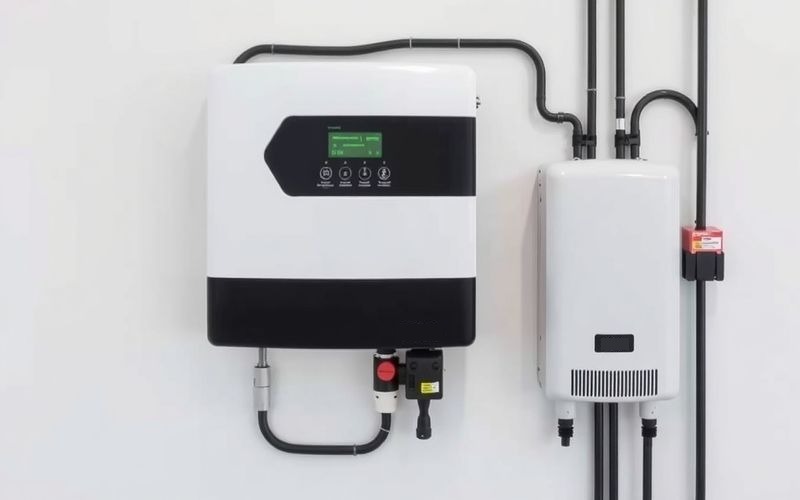
What Does a Solar Inverter Do?
A solar inverter is the brain of your photovoltaic system. Its primary job is straightforward: convert the direct current (DC) electricity produced by your solar panels into alternating current (AC) electricity that your home appliances and the Maltese grid can use.
But modern inverters do much more than simple DC-to-AC conversion. They optimise power output through Maximum Power Point Tracking (MPPT), monitor system performance, ensure grid safety with anti-islanding protection, and in some cases manage battery storage. Choosing the right inverter is just as important as choosing the right panels.
String Inverters
String inverters are the most common and cost-effective type used in Malta. A single string inverter handles the DC output from an entire "string" of panels wired together in series.
How They Work
Your solar panels are connected in one or more series strings (typically 6 to 15 panels per string). The combined DC voltage from each string feeds into the inverter, which converts it to 230V AC. Most residential string inverters have one or two MPPT inputs, allowing you to run separate strings for panels facing different directions.
Pros
- Lowest cost: A single unit for the whole system, typically costing €500 to €1,500 depending on capacity.
- High efficiency: Modern string inverters achieve 95–98% conversion efficiency.
- Proven reliability: Decades of field experience and well-understood technology.
- Easy to service: A single unit mounted in an accessible location is simple for technicians to inspect or replace.
- Good monitoring: Most brands offer Wi-Fi connectivity and smartphone apps for real-time performance tracking.
Cons
- String-level optimisation only: The entire string performs at the level of its weakest panel.
- Single point of failure: If the inverter fails, your entire system stops producing.
- Limited flexibility: Less ideal for complex roof layouts with panels facing multiple directions or experiencing partial shading.
Best For
Homes with a simple, unshaded roof where all panels face the same direction. This describes many Maltese flat-roofed properties, which is why string inverters remain the most popular choice on the islands.
Microinverters
Microinverters are small inverters mounted directly behind (or integrated into) each individual solar panel. Instead of one large inverter for the whole system, you have one small inverter per panel.
How They Work
Each microinverter converts its panel's DC output to AC independently. The AC from all panels is then combined and fed into your consumer unit. Each panel operates as an independent power source, unaffected by the performance of neighbouring panels.
Pros
- Panel-level optimisation: Each panel produces its maximum output regardless of what other panels are doing.
- Better for complex roofs: Ideal when panels face different directions or experience partial shading from chimneys, water tanks, or neighbouring buildings.
- Panel-level monitoring: Track the performance of every individual panel, making it easy to identify issues.
- No single point of failure: If one microinverter fails, only that panel is affected.
- Safer DC voltage: Lower voltage at the panel level reduces electrical hazard risk.
- Easy to expand: Simply add more panels with their own microinverters at any time.
Cons
- Higher cost: At €100 to €200 per panel, the total inverter cost for a 10-panel system could be €1,000 to €2,000.
- Rooftop maintenance: If a microinverter fails, a technician must go onto the roof to replace it.
- Heat exposure: Mounted behind panels on a hot Maltese rooftop, microinverters face demanding thermal conditions.
Hybrid (Battery) Inverters
Hybrid inverters combine solar inverter functionality with a built-in battery charge controller. They can manage solar panels, battery storage, grid connection, and in some models, backup power during outages — all from a single unit.
How They Work
A hybrid inverter handles multiple energy flows: solar DC input, battery DC charging and discharging, AC output to your home, and AC import/export with the grid. Intelligent software decides in real time whether to use solar power directly, charge the battery, or sell excess to the grid.
Pros
- All-in-one solution: Eliminates the need for a separate battery inverter, saving space and simplifying wiring.
- Battery-ready: Even if you do not install a battery immediately, a hybrid inverter lets you add one later without replacing equipment.
- Smart energy management: Prioritises self-consumption, stores excess for evening use, and can be programmed for time-of-use optimisation.
- Backup power (some models): Certain hybrid inverters provide emergency power during grid outages.
Cons
- Higher cost: More expensive than a standard string inverter, though often cheaper than buying a string inverter plus a separate battery inverter later.
- Complexity: More settings and configuration options mean installation requires a knowledgeable technician.
- Not all models are equal: Some budget hybrid inverters have limited battery compatibility or lower efficiency.
Inverter Comparison Table
| Feature | String Inverter | Microinverter | Hybrid Inverter |
|---|---|---|---|
| Cost | €500–€1,500 total | €100–€200 per panel | €1,000–€3,000 total |
| Efficiency | 95–98% | 95–97% | 93–97% |
| Monitoring | System or string level | Individual panel level | System level + battery |
| Shade Tolerance | Low (string-level impact) | High (panel-level independence) | Low to moderate |
| Battery Compatible | No (requires separate battery inverter) | No (requires AC-coupled battery) | Yes (built-in) |
| Expandability | Limited by inverter capacity | Easy — add panels individually | Moderate |
| Typical Warranty | 5–12 years | 20–25 years | 5–10 years |
| Best For | Simple roofs, budget systems | Complex roofs, shading | Battery storage, backup power |
Sizing Your Inverter
Proper inverter sizing is essential for system performance and compliance with Maltese regulations. Here are the key considerations:
Match Inverter Capacity to Panel Array
As a general rule, your inverter's rated AC output should be close to your total panel capacity in kWp. Most installers in Malta use an inverter-to-panel ratio between 0.8 and 1.0. For example, a 4 kWp panel array would typically pair with a 3.5 to 4 kW inverter.
Slight undersizing is common and acceptable because panels rarely produce their full rated output simultaneously. This approach saves cost without meaningfully reducing annual energy production.
MPPT Input Configuration
If your panels face two different directions (for example, some east and some west on a Maltese rooftop), you will want an inverter with at least two MPPT inputs. Each MPPT independently optimises the power from its connected string.
Voltage Window
Check that the total string voltage falls within the inverter's operating voltage range. Your installer will calculate this, accounting for temperature variations that affect panel voltage — important in Malta where rooftop temperatures can swing from 5°C in winter to over 60°C in summer.
Popular Inverter Brands in Malta
SMA (Germany)
One of the world's oldest and most respected inverter manufacturers. Their Sunny Boy range is popular for residential systems in Malta, known for robust build quality and excellent monitoring through the Sunny Portal platform.
Fronius (Austria)
The Fronius Primo (single-phase) and Symo (three-phase) series are widely installed across Malta. Their Fronius GEN24 Plus line includes hybrid models with battery integration.
Huawei (China)
Huawei has rapidly gained market share in Malta. Their SUN2000 series offers competitive pricing, built-in Wi-Fi, and compatibility with Huawei's LUNA2000 battery system.
Enphase (USA)
The leading microinverter brand worldwide. Enphase's IQ series microinverters are a premium choice for installations with shading issues or complex roof layouts.
Check Local Support
When choosing an inverter brand, check that the manufacturer has local warranty support in Malta or a nearby European service centre. A great inverter is only as good as the after-sales support behind it.
Inverter Maintenance and Lifespan
While solar panels can last 25 to 30 years, inverters typically have a shorter lifespan:
- String inverters: 10 to 15 years average lifespan. Plan to replace the inverter once during the life of your solar panels.
- Microinverters: 20 to 25 years, often matching or exceeding the panel warranty.
- Hybrid inverters: 10 to 15 years, similar to string inverters.
To maximise inverter life in Malta's warm climate, ensure it is installed in a well-ventilated, shaded location. Avoid enclosed cupboards or direct afternoon sun exposure.
Which Inverter Should You Choose?
For most Maltese homes with a straightforward roof layout, a quality string inverter from SMA, Fronius, or Huawei offers the best value. If you have shading challenges or a complex multi-directional roof, consider Enphase microinverters or Huawei optimisers. If battery storage is part of your plan, a hybrid inverter from Fronius GEN24, Huawei, or similar will save you the cost and complexity of adding a separate battery inverter later.
Explore battery options in our Battery Storage Guide, or see the full installation process in our Going Solar Guide.