Importing from China
China is a non-EU country, so importing direct means duty, import VAT, customs clearance and real risk on certification and warranty. Here is what it actually involves — and when it is (rarely) worth it.
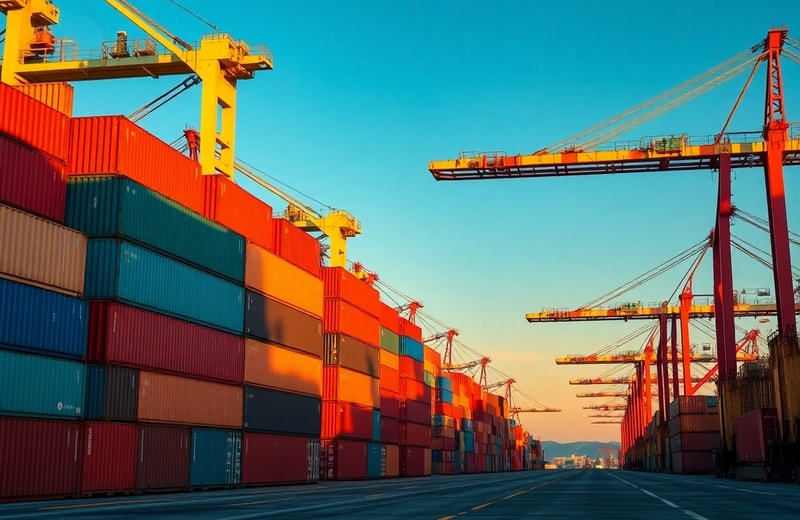
China is not in the EU, so buying direct is a formal import into the single market through Malta — complete with customs duty, import VAT, a clearance declaration and real risk on certification and warranty. On paper the panels look cheap; here is what the landed reality costs, and when it is (rarely) worth it.
This is a fundamentally different exercise from buying within the EU, where there is no duty and no clearance at all. Treat the sticker price on a Chinese trading platform as the beginning of the sum, not the end of it.
Customs duty
China has no free-trade agreement with the EU, so imports attract the full Most-Favoured-Nation rate under the EU Common Customs Tariff. The good news for solar is that the headline components carry little or no duty. The EU anti-dumping and countervailing measures on Chinese solar modules expired on 3 September 2018 and were not reinstated, so panels are expected to enter duty-free (confirm the rate on TARIC). Separately, the European Commission has moved to restrict EU funding for projects that use inverters from suppliers it considers high-risk (mainly Chinese), and the EU Forced Labour Regulation will apply from 14 December 2027. Neither is a customs duty, and neither currently blocks a private import.
| Component | HS / TARIC heading | EU MFN duty (unverified) |
|---|---|---|
| PV modules / solar panels | 8541.43 | 0% |
| Inverters | 8504.40 | 0% |
| Lithium-ion batteries | 8507.60 | 2.7% |
The battery is the only line that appears to carry a real duty, at 2.7%. We could not confirm these rates directly against TARIC (some battery subheadings have suspensions), so treat them as unverified. Before you commit, verify the live rate for your exact product on the EU TARIC or Access2Markets database — component-level measures can differ (solar glass, for instance, has had its own anti-dumping history), and tariff codes are updated regularly.

Import VAT
This is where the numbers move. Malta charges import VAT at the standard 18%, calculated on the CIF value of the goods (cost + insurance + freight) plus any duty, and it is collected at the border before customs will release the shipment. A common misunderstanding is that low-value imports escape VAT: they do not. The old €150 duty-free threshold no longer works as it did: since 1 July 2026 a flat €3 customs duty per tariff line is charged on consignments up to €150, as a temporary measure. VAT is a separate matter. The old €22 low-value VAT exemption was abolished across the EU in 2021, so VAT applies to virtually every import.
Whether that VAT is a real cost depends on who you are. A private homeowner pays it up front and cannot reclaim it — it is simply added to your bill. A VAT-registered business can reclaim or defer the import VAT through its returns, which is one reason China-direct only starts to make sense at the installer end of the market.
A quick worked example
Say a pallet of panels costs €3,000 and sea freight plus insurance to Malta adds €700, for a CIF value of €3,700. If duty on panels is 0%, import VAT is 18% of €3,700 = €666, payable at the border. A private buyer never sees that €666 again; a VAT-registered importer recovers it. Broker and port charges then sit on top — figures are illustrative, so price your own shipment.
EORI, declarations and the Freeport
Bringing goods into Malta from a third country means dealing with Customs directly. In practice you will need:
- An EORI number (Economic Operators Registration and Identification), tied to your Maltese VAT number, to appear on any declaration;
- A SAD import declaration (Single Administrative Document), plus an ENS pre-arrival entry summary lodged before the vessel arrives;
- Supporting documents: the commercial invoice, bill of lading (or air waybill) and packing list — and dangerous-goods paperwork for any battery.
Unless you clear freight for a living, engage a customs broker or freight forwarder to file on your behalf. Malta's container gateway is the Malta Freeport at Marsaxlokk, one of the Mediterranean's main transshipment hubs: a full container (FCL) lands there, while consolidated part-loads (LCL) often clear through Valletta. Budget a few hundred euro in broker and port handling fees on top of freight. The mechanics are covered in more depth in our shipping & customs guide.

Incoterms
The Incoterm in your contract decides who pays for freight, who lodges the customs declaration, and who is liable for duty and VAT. Get it wrong and a “cheap” quote turns into a surprise bill and a shipment stuck at the port.
| Term | Sea freight | Malta clearance | Duty & import VAT |
|---|---|---|---|
| FOB (Free On Board) | You arrange & pay | You | You |
| CIF (Cost, Insurance, Freight) | Seller books to port | You | You |
| DDP (Delivered Duty Paid) | Seller | Seller | Seller |
CIF does not mean “delivered”
Many buyers assume a CIF quote gets the goods to their door. It does not. CIF only covers the sea leg to the port — you still have to clear customs and pay the duty and 18% VAT yourself, then arrange the final delivery. DDP is the easiest term but the priciest, and it is often unreliable from China: the seller must act as a valid EU importer of record, and many simply cannot. If you want a door delivery, a DAP or DPU arrangement with a reputable forwarder tends to be cleaner.
Freight costs
Malta is a small island at the end of a long line, and ocean freight from China rewards volume you almost certainly do not have.
- LCL (part-load): priced per cubic metre plus a stack of fixed origin and destination charges. For the handful of pallets a house needs, those fixed fees dominate and the economics are poor.
- FCL (full container): far cheaper per unit, but a 20-foot container holds vastly more than one home's 10–25 panels — you would be buying a container's worth to justify it.
- Transit time: roughly 30–45 days port-to-port, usually via transshipment rather than a direct call.
- Air freight: a multiple of sea cost and rarely worth it for something as bulky and low-value-per-kilo as panels.
All freight figures are indicative and highly volatile — get live quotes for your specific shipment before planning around a number.

Lithium batteries
If your order includes a battery, the whole shipment steps up a level of difficulty. Lithium-ion cells are Class 9 dangerous goods — UN3480 when shipped on their own, UN3481 when packed with or inside equipment — and by sea they fall under the IMDG Code.
Batteries are the hardest, most expensive item to import
You will need a valid UN38.3 test report, a current safety data sheet (MSDS) and a proper dangerous-goods declaration. Many shipping lines refuse to carry lithium batteries as LCL at all, or add a 30–50% surcharge, so a full container is frequently the only route. Misdeclaring dangerous goods to dodge the paperwork carries severe penalties — and the DG overhead often erases whatever saving tempted you in the first place.
Certification when buying direct
Even setting logistics aside, buying “from the factory” is harder than the marketplaces make it look. Minimum order quantities on Alibaba and with manufacturers typically run from around 100 up to several thousand panels — wildly beyond a household's 10–25 — so in practice you buy through a trader anyway, and lose much of the price advantage that drew you in.
The more serious hazard is certification. Fake CE certificates are sold cheaply, and a marked-up PDF proves nothing. Insist on genuine IEC test reports from an accredited laboratory (IEC 61215 and IEC 61730 for panels, IEC 62109 for inverters), verify the certificate numbers with the issuing body, and consider a pre-shipment inspection. This matters because of who carries the can:
As the importer, you become the legal guarantor
When you import from outside the EU, you take on the obligations of the manufacturer for the EU market. You must hold the Declaration of Conformity and technical file for around ten years and you carry product liability. And uncertified kit is a dead end in Malta anyway: it will fail Enemalta and REWS approval, disqualify you from the grant, and void your insurance.
Warranty and returns
A manufacturer's warranty is only worth the ease of enforcing it. From Malta, a warranty claim against a Chinese supplier is effectively unenforceable — and the cost of shipping a failed panel or battery back (as dangerous goods, in the battery's case) routinely exceeds the value of the replacement. Realistically, a China-direct purchase should be treated as bought “as-is”, with no meaningful recourse if something fails.
The honest verdict
For a single Maltese household, China-direct rarely adds up
You sit below the minimum order quantity, freight punishes small volume, the import VAT is not recoverable, you inherit importer liability, counterfeit-certificate risk can sink your grid approval and grant, and the battery brings a dangerous-goods headache. It makes sense mainly for a VAT-registered installer buying at container scale, repeatedly. Remember the key point: panels enter the EU duty-free whichever route you take — so the only genuine saving China-direct offers is on uncertified kit, which must never go on a grid-connected Maltese roof. For almost everyone, buying from an EU distributor who has already handled the duty, VAT, CE conformity and warranty is simpler and, once risk is counted, usually cheaper.