How Solar Panels Work — Photovoltaic Technology Explained
From the photovoltaic effect to the feed-in tariff — understand the science and technology behind converting Malta's abundant sunshine into clean, usable electricity.
Last updated: 23 October 2026
What Is the Photovoltaic Effect?
At the heart of every solar panel is a remarkable physical phenomenon called the photovoltaic effect. Discovered by French physicist Edmond Becquerel in 1839, it describes how certain materials generate an electrical voltage when exposed to light. This is the fundamental science that allows your rooftop solar panels to turn Malta's abundant sunshine into usable electricity.
When photons (particles of light) strike a solar cell, they transfer their energy to electrons in the cell's semiconductor material. This energy boost frees electrons from their atomic bonds, allowing them to flow as an electrical current. No moving parts, no combustion, no noise — just sunlight quietly becoming electricity.
Did you know?
The photovoltaic effect was discovered nearly 200 years ago, but it took until the 1950s for Bell Labs to create the first practical silicon solar cell. Today's panels are roughly 100 times more efficient than that original prototype.
Inside a Silicon Solar Cell
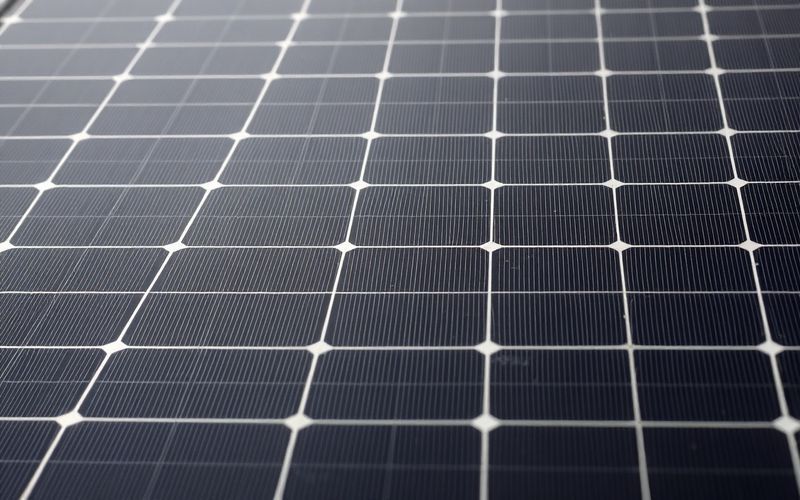
The vast majority of solar panels used in Malta and worldwide are built from crystalline silicon, the same base element found in beach sand. Here is how a typical solar cell is structured:
- N-type layer (top): Silicon doped with phosphorus, which has extra electrons. This layer carries a negative charge.
- P-N junction: The boundary between the two layers where an electric field forms naturally. This field is the engine that drives current flow.
- P-type layer (bottom): Silicon doped with boron, which has "holes" (missing electrons). This layer carries a positive charge.
- Metal contacts: Thin conductive strips on the top and a metal sheet on the bottom collect the flowing electrons and channel them into a circuit.
- Anti-reflective coating: A thin layer (usually giving panels their blue or black appearance) that minimises light reflection so more photons reach the silicon.
When sunlight hits the cell, photons knock electrons loose in the silicon. The electric field at the P-N junction pushes these free electrons toward the N-type layer and the holes toward the P-type layer. Connect a wire between the two layers and you get a steady flow of direct current (DC) electricity.
How DC Electricity Is Generated
A single silicon solar cell produces roughly 0.5 to 0.6 volts of electricity. That is not enough to power much on its own, so manufacturers wire many cells together in series within a single panel. A typical residential panel contains 60 or 72 cells, producing a combined output of 30 to 45 volts DC.
The amount of current (measured in amps) depends on the cell size and how much sunlight is hitting the panel. Multiply voltage by current and you get watts — the measure of power. A modern residential panel typically generates between 370 and 450 watts under standard test conditions.
Malta's Solar Advantage
Malta receives around 3,000 hours of sunshine per year — one of the highest figures in Europe. A well-positioned solar panel in Malta can produce up to 1,600 kWh per kWp installed annually, significantly more than panels in northern Europe.

The Role of Solar Inverters
Your solar panels produce direct current (DC), but your home appliances, lights, and the national electricity grid all run on alternating current (AC). This is where the solar inverter comes in — it is one of the most critical components in your system.
The inverter converts the DC output from your panels into grid-compatible AC electricity (230V, 50Hz in Malta). Modern inverters do much more than simple conversion:
- Maximum Power Point Tracking (MPPT): Continuously adjusts the electrical load to extract the maximum possible power from your panels, even as sunlight conditions change throughout the day.
- Grid synchronisation: Ensures the AC output matches the grid's voltage and frequency precisely.
- Safety shutdown: Automatically disconnects from the grid during power outages to protect utility workers (anti-islanding protection).
- Monitoring: Provides real-time data on energy production, which you can usually view on a smartphone app.
You can learn more about the different types of inverters in our Solar Inverter Guide.
Feed-in Tariff: Selling Electricity Back to the Grid
Net metering, where exports were offset unit for unit against imports, is closed to new connections. It only continues for older systems connected before September 2010. A new system in Malta is paid for what it exports instead. Here is how it works:
- When your panels produce more electricity than you are using, the excess flows back into the grid and your meter records the export.
- At night or on cloudy days, you draw electricity from the grid as normal and pay for it at your usual tariff.
- Under the feed-in tariff, exports from a system under 40 kWp are paid at €0.15/kWh for 20 years, if the system did not receive a grant.
Solar electricity you use at home saves you the price you would otherwise pay for it, and a battery can raise that share. For more details on Malta's incentive schemes, visit our Government Incentives page.
Components of a Complete Solar System
A grid-connected solar PV system in Malta typically consists of these key components:
Solar Panels
The panels themselves, mounted on your roof or ground-mounted. Most Maltese homes install between 6 and 16 panels, depending on roof space and energy needs. Panels are rated to last 25 to 30 years, with most manufacturers guaranteeing at least 80% of original output after 25 years.
Mounting System
Aluminium rails and clamps that secure the panels to your roof at the optimal angle. In Malta, a tilt of around 30 to 35 degrees facing south provides the best annual energy yield. Flat-roof mounting systems with adjustable tilt frames are common on Maltese rooftops.
Solar Inverter
Converts DC to AC. Can be a single string inverter for the whole array, microinverters attached to each panel, or a hybrid inverter that also manages battery storage. See our Inverter Guide for a full comparison.
Electrical Wiring and Protection
DC cables connect panels to the inverter, and AC cables connect the inverter to your consumer unit (fuse box). DC isolators, AC isolators, surge protection devices, and proper earthing are all essential safety components.
Electricity Meter
A bidirectional meter (installed by Enemalta) tracks both the electricity you import from and export to the grid. This is how the tariff payments are calculated.
Optional: Battery Storage
A home battery lets you store excess solar energy for use in the evening or during outages, increasing your self-consumption rate. Battery storage is becoming increasingly popular in Malta. Learn more in our Battery Storage Guide.
Did you know?
A typical 3 kWp solar system in Malta (around 7 to 8 panels) can generate enough electricity to cover the annual consumption of an average Maltese household, saving approximately 1.5 tonnes of CO2 emissions per year.
From Sunlight to Socket: The Complete Journey
Here is the step-by-step journey of solar electricity from your rooftop to your appliances:
- Sunlight hits the panels — Photons penetrate the anti-reflective coating and reach the silicon cells.
- Electrons are freed — The photovoltaic effect generates DC electricity within each cell.
- Cells combine output — Cells wired in series within a panel produce a usable voltage.
- DC travels to the inverter — Cables carry the direct current from rooftop panels to your inverter (usually mounted near your fuse box).
- Inverter converts DC to AC — The inverter transforms the electricity to 230V AC, matching the grid standard.
- AC powers your home — Your appliances use the solar electricity first. Any excess is exported to the grid.
- Meter records the balance — Your bidirectional meter tracks imports and exports for billing.
Ready to Go Solar?
Understanding how solar panels work is the first step toward energy independence. Malta's exceptional sunshine makes it one of the best locations in Europe for solar PV. Whether you are considering a small rooftop system or a larger commercial installation, the technology is proven, reliable, and more affordable than ever.
Explore our Step-by-Step Guide to Going Solar to learn how to plan, size, and install your own solar system in Malta.