About Malta — Geography, Culture & Solar Potential
A small island nation in the heart of the Mediterranean, Malta combines intense sunshine, limited land area, and progressive EU energy policy to create one of Europe's most compelling solar energy markets.
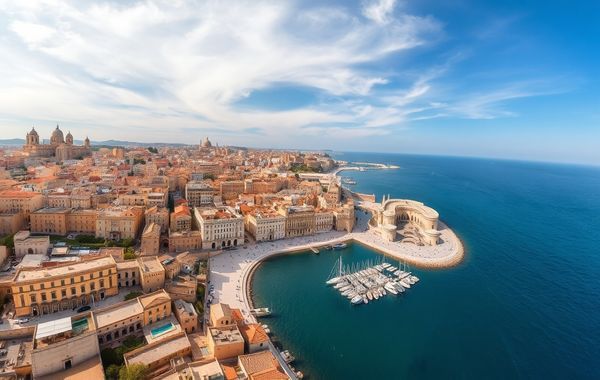
Malta's Location and Geography
Malta is a small archipelago situated in the central Mediterranean Sea, approximately 80 km south of Sicily (Italy) and 284 km north of the North African coast. The country sits at a latitude of 35.9°N — further south than Tunis and roughly level with Crete — placing it in one of Europe's most sun-rich zones.
The Republic of Malta consists of three inhabited islands: Malta (the largest, at 246 km²), Gozo (67 km²), and Comino (3.5 km²). Together they total just 316 km², making Malta the EU's smallest member state by area. Despite its diminutive size, the islands are home to approximately 530,000 people, giving Malta one of the highest population densities in the world — roughly 1,672 people per km².
Landscape and Terrain
Malta's landscape is predominantly flat to gently undulating, composed almost entirely of limestone bedrock. The islands have no mountains, forests, or permanent rivers. The highest point, Ta' Dmejrek on Malta, reaches just 253 metres above sea level. This low-profile, unshaded terrain is highly advantageous for solar energy installations, as there are few natural obstructions to block sunlight.
The coastline stretches for 196.8 km and features dramatic cliffs on the western shores, while the eastern coast is characterised by natural harbours and low-lying bays. The absence of significant vegetation cover and the reflective properties of limestone contribute to high ambient light levels across the islands.
Urbanisation and Land Use
Malta is one of the most urbanised and densely built countries in Europe. Over 95% of the population lives in urban areas, and much of the island is covered by buildings, roads, and infrastructure. This intense urbanisation means that rooftop solar represents the most practical pathway for large-scale photovoltaic deployment, rather than ground-mounted solar farms that would compete with agriculture and development for scarce land.
The flat-roofed Mediterranean building style that dominates Maltese architecture is particularly well-suited to solar panel installation. Most residential and commercial buildings have unobstructed, south-facing roof space that can accommodate PV systems with minimal structural modification.
Malta's Energy Dependency Challenge
Malta has historically imported virtually 100% of its fossil fuel energy. With no domestic oil, gas, or coal reserves, the islands relied entirely on imported petroleum products for electricity generation until the 2010s. Solar energy represents a strategic solution: the one abundant natural energy resource Malta possesses is sunshine, with over 3,000 hours of direct sunlight per year.

People, Language, and Culture
Malta has two official languages: Maltese (a Semitic language with heavy Italian and English influence) and English. The widespread use of English makes it easy for international solar technology companies and investors to operate in the Maltese market.
The country joined the European Union in 2004 and adopted the euro in 2008, aligning its energy regulations and environmental targets with EU directives. This includes binding commitments under the EU's Renewable Energy Directive, which has been a key driver behind Malta's growing solar sector.
Malta's economy has grown rapidly in recent decades, driven by financial services, tourism, gaming, and technology. This economic growth has increased electricity demand significantly, making the transition to domestically produced renewable energy even more strategically important.

Why Malta Is Ideal for Solar Energy
Several geographic and demographic factors combine to make Malta an exceptional location for photovoltaic energy generation:
- Southern latitude (35.9°N): Malta receives significantly more solar irradiance than northern European countries. Annual global horizontal irradiance is about 1,890 kWh/m² (PVGIS), well above northern European levels.
- Over 3,000 sunshine hours per year: Malta's Mediterranean climate delivers reliable, intense sunshine throughout the spring, summer, and autumn months, with even winter months averaging over 5 hours of sunshine daily.
- Flat limestone terrain: The absence of mountains, forests, and tall vegetation means minimal shading of rooftops and potential ground-mount sites.
- Dense urbanisation with flat roofs: The traditional Maltese flat-roofed building provides an ideal, ready-made platform for PV panel installation across thousands of residential and commercial properties.
- High electricity demand per capita: Malta's reliance on air conditioning during hot summers and electric water heating creates strong domestic electricity demand that solar can directly offset.
- EU regulatory framework: As an EU member state, Malta is bound by ambitious renewable energy targets and benefits from EU funding programmes that support solar deployment.
- Energy security imperative: Malta's complete dependence on energy imports gives the country a powerful strategic incentive to develop its only domestic energy resource — solar radiation.

Malta at a Glance
| Attribute | Detail |
|---|---|
| Official Name | Republic of Malta (Repubblika ta' Malta) |
| Location | Central Mediterranean Sea |
| Total Area | 316 km² |
| Population | ~530,000 |
| Population Density | ~1,672/km² |
| Capital | Valletta |
| Official Languages | Maltese, English |
| EU Member Since | 2004 |
| Currency | Euro (€) since 2008 |
| Highest Point | Ta' Dmejrek (253 m) |
| Annual Sunshine Hours | 3,000+ |
| Solar Irradiance | about 1,890 kWh/m²/year |

Continue Exploring
Learn more about the factors that make Malta a leading solar energy location in Europe:
- Malta Climate & Sunshine Data — detailed monthly irradiance, temperature, and rainfall figures for solar energy planning.
- Malta Energy History — trace Malta's journey from oil dependency to its current renewable energy transformation.
- Solar Market Statistics — installed capacity, growth trends, and market analysis for Malta's PV sector.
About this site
PVMalta.com is an independent guide to solar energy in Malta. Figures are dated and link to their primary sources, such as REWS, Enemalta and the National Statistics Office. To get in touch, use the contact form. The domain pvmalta.com is for sale; see the domain page.